Skip to content


Summarize with
Painting textured walls in Austin works best when the painter matches the paint, roller, and application method to the texture. Knockdown and orange peel finishes need more paint, careful rolling, and the right nap length because their peaks and valleys hold color differently from smooth drywall.
Color Stars Painting LLC has spent more than 22 years painting Austin homes, including older houses, new builds, rentals, and remodels with heavy wall texture. Our interior painting services in Austin cover surface preparation, priming, texture repair, and clean finishes that hold up in Central Texas light. This guide explains painting textured walls the right way, from choosing a sheen to avoiding visible lap marks.
Knockdown vs. Orange Peel: Key Differences
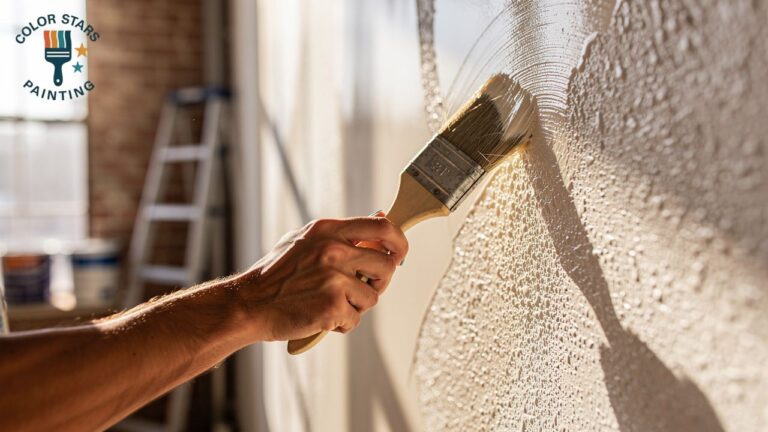
Knockdown texture has flattened, irregular patches that create shadows across the wall. Orange peel has a finer, more uniform bump pattern that resembles the surface of an orange.
| Feature | Knockdown Texture | Orange Peel Texture |
|---|---|---|
| Appearance | Flattened splatter with visible shadows | Fine, consistent dotted surface |
| Common location | Living rooms, bedrooms, hallways | Bedrooms, rentals, newer homes |
| Paint use | Higher because valleys hold more paint | Moderate to high |
| Best roller nap | 3/4 inch to 1 inch | 1/2 inch to 3/4 inch |
| Repair difficulty | Harder to blend after patching | Easier to blend with spray or texture repair |
| Best look after painting | Soft, dimensional, forgiving | Clean, subtle, uniform |
Neither texture is automatically better. Knockdown hides minor drywall flaws better, while orange peel gives a more even appearance and is common in newer Austin construction.
For a room by room budget before starting, our interior painting cost guide for Austin explains how wall condition, ceiling height, and texture repair affect the final price.
Why Austin Homes Have Textured Walls
Textured walls are common in Texas because they hide minor framing movement, drywall seams, and small imperfections that become more noticeable in bright sunlight. They also reduce the need for perfectly smooth drywall finishing, which can lower construction and repair costs.
Austin homes often use texture because:
- Intense sunlight reveals drywall flaws on smooth walls
- Texture helps blend patches after repairs
- Knockdown and orange peel are familiar finishes in local construction
- Textured surfaces can reduce the appearance of minor settling cracks
- Builders can finish large areas efficiently with spray texture
The tradeoff is maintenance. A textured wall collects dust in its low spots, absorbs more paint, and makes touch up paint walls harder to blend if the original texture was damaged.
How to Paint Orange Peel Walls
Cleaning the walls, fixing small damaged areas, and choosing the right roller are the first steps to getting a smooth finish. When painting orange peel walls, use a roller with the right nap length to reach the small bumps and cover the surface evenly.
Follow this process:
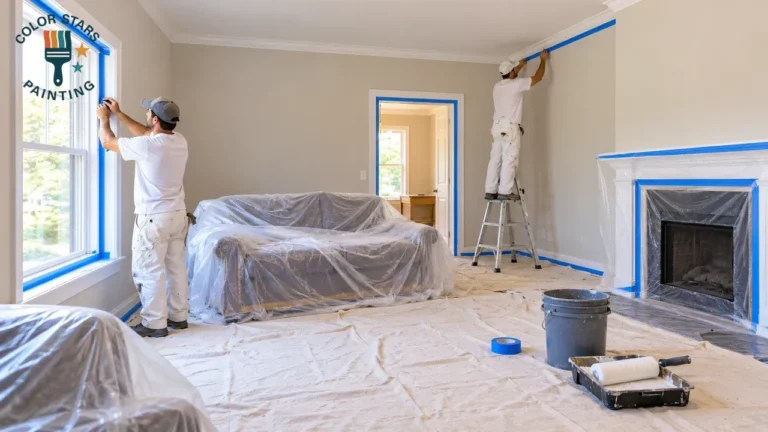
- Move furniture away from the walls and cover floors.
- Dust the walls with a microfiber cloth or vacuum brush attachment.
- Wash greasy or stained areas with a mild cleaner and let them dry.
- Fill nail holes and small cracks, then match the surrounding texture.
- Spot prime repairs, stains, and darker colors.
- Cut in edges with a quality angled brush.
- Roll in manageable sections, keeping a wet edge.
- Apply a second coat after the first coat dries according to the label.
A 3/4 inch roller nap is a dependable starting point for most orange peel walls. For heavier texture, move to a 1 inch nap. Avoid overworking the paint because repeated rolling can pull texture loose or create shiny, uneven patches.

How to Paint Knockdown Textured Walls
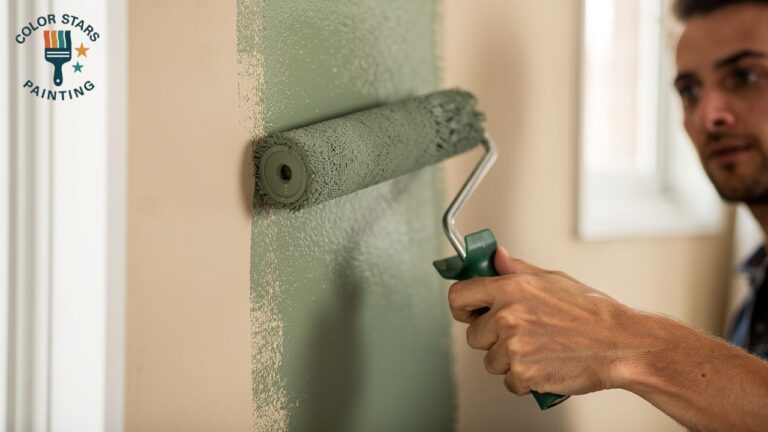
Use a thicker roller and apply the paint carefully to cover every part of the wall. Make sure the paint reaches the lower areas of the texture. Rushing the job or using too little paint can leave the surface patchy when painting knockdown textured walls.
Use this approach:
- Inspect the wall for loose texture, cracks, and previous patch marks.
- Repair damaged areas and recreate the knockdown pattern before painting.
- Prime repaired spots, stains, or areas with a different sheen.
- Use a 3/4 inch or 1 inch roller nap.
- Load the roller fully but avoid dripping.
- Roll in overlapping sections while the edge remains wet.
- Back roll lightly to work paint into the valleys.
- Apply a second coat for even color and consistent sheen.
Do not press hard on the roller. Heavy pressure can flatten texture, leave roller marks, and create shiny spots once the wall dries.
| Tip: Paint a two foot test area first and view it in morning and late afternoon light. Austin sun can reveal roller marks and uneven sheen that are hard to see indoors during the middle of the day. |

Best Paint Sheen for Textured Walls
The best paint sheen is usually eggshell or matte for living areas and bedrooms. These finishes soften light, hide minor surface variation, and make texture look intentional rather than patchy.
| Room | Recommended Sheen | Why It Works |
|---|---|---|
| Living room | Eggshell or matte | Soft appearance and better flaw hiding |
| Bedroom | Eggshell or matte | Calm finish with easy maintenance |
| Hallway | Eggshell or satin | More washable for frequent contact |
| Kitchen | Satin | Easier to wipe clean around cooking areas |
| Bathroom | Satin or semi gloss | Better moisture resistance |
| Trim and doors | Semi gloss | Durable and easy to clean |
Avoid high gloss on large textured walls. It reflects light from every peak and valley, which makes roller marks, patches, and texture inconsistencies much more noticeable.
Repairing Texture Before Painting
Painting over damaged texture without repairing it usually makes the flaw more obvious. A patch that is smooth while the surrounding wall is textured will stand out after the paint dries.
Common repairs include:
- Filling nail holes and small dents
- Fixing hairline cracks with flexible patching compound
- Replacing damaged drywall sections
- Recreating orange peel with spray texture
- Rebuilding knockdown with texture compound and a knockdown knife
- Sanding only the repaired edges, not the surrounding texture
- Priming every repaired area before the finish coat
The goal is not to make the patch invisible before painting. The goal is to make the texture pattern consistent, so the finished wall reads as one continuous surface.
Lead Safety in Older Austin Homes
Homes built before 1978 may contain lead based paint, especially around original trim, windows, doors, and older painted layers. Disturbing that paint during sanding, scraping, or demolition can create hazardous dust.
The EPA requires firms paid to disturb painted surfaces in pre 1978 homes, childcare facilities, and preschools to be certified and trained in lead safe work practices. The agency also restricts unsafe practices such as open flame burning and power sanding without HEPA dust control.
Before repainting an older Austin home, ask whether the painter will test affected surfaces or assume lead is present and use lead safe practices. Homeowners doing their own work in their own residence are generally exempt, but hired contractors are not.
Paint Choice and Indoor Air Quality
Choose a high quality acrylic latex paint with low VOCs for most interior textured walls. Better paint spreads more evenly, covers in fewer coats, and resists burnishing when walls are cleaned.
The EPA reports that concentrations of many volatile organic compounds are consistently higher indoors, up to ten times higher than outdoors, and identifies paints and lacquers as common sources. Choose low VOC paint, ventilate the room while painting, and keep airflow moving while the finish cures.
Look for these details on the label:
- Low VOC or zero VOC formula
- Interior acrylic latex base
- Scrubbability or washability rating
- Primer and paint in one only if the wall is in good condition
- Recommended dry and recoat times
- Suitable sheen for the room
| Tip: Buy paint from the same product line for every coat. Mixing brands or product lines can create differences in sheen, coverage, and touch up color. |
How Much Does Painting Cost in Austin?
Most Austin homeowners can expect to pay $2.50 to $4.50 per square foot for professional painting on textured walls, depending on wall condition, texture depth, ceiling height, and the number of colors. A typical 12 by 12 bedroom often lands between $450 and $900, while a living room commonly ranges from $700 to $1,400.
| Project | Estimated Austin Cost |
|---|---|
| Bedroom walls, 12 by 12 feet | $450 to $900 |
| Living room walls | $700 to $1,400 |
| Kitchen walls | $600 to $1,200 |
| Bathroom walls | $300 to $650 |
| Ceiling add on per room | $150 to $350 |
| Texture repair | $75 to $250 per small area |
| Full 1,500 square foot interior | $3,750 to $6,750 |
| Full 2,000 square foot interior | $5,000 to $9,000 |
These estimates assume standard eight foot ceilings, two coats, normal prep, and no major drywall replacement. Vaulted ceilings, heavy repairs, dark color changes, wood paneling, or extensive texture rebuilding increase the price.
Common Problems and Fixes
| Problem | Likely Cause | Best Fix |
|---|---|---|
| Roller marks | Wrong nap, dry edges, or too much pressure | Use the correct nap, keep a wet edge, and apply a full second coat |
| Patchy coverage | Texture valleys did not receive enough paint | Use a thicker nap and do not stretch the paint |
| Shiny spots | Overworking the paint or using the wrong sheen | Use matte or eggshell and avoid repeated rolling |
| Visible patches | Texture was not matched before painting | Repair texture, prime, then repaint the full wall |
| Peeling paint | Moisture, poor adhesion, or dirty surface | Clean, scrape loose paint, prime, and repaint |
| Cracks returning | Wall movement or improper repair | Use flexible patching material and address the underlying cause |
| Dust collecting in texture | Normal for textured walls | Dust regularly and use a washable sheen in busy rooms |
FAQs
Is orange peel or knockdown better?
Neither is better for every home. Orange peel gives a finer, more uniform look, while knockdown hides drywall imperfections better and creates more visible shadowing. Choose based on the room, lighting, and the condition of the drywall.
Why do houses in Texas have textured walls?
Textured walls are common in Texas because they hide minor drywall imperfections, blend repairs, and perform well in strong sunlight. They are also a familiar and efficient finish in many local homes.
Can I just paint over textured walls?
Yes, if the texture is intact, clean, and firmly attached. Clean the surface, repair damaged areas, prime stains or repairs, and use a roller nap thick enough to reach the texture valleys.
What is the most popular wall texture right now?
Knockdown remains one of the most popular wall textures in Texas homes. Orange peel is also common, especially in bedrooms, rentals, and newer construction where a finer finish is preferred.
Does Color Stars Painting LLC repair wall texture before painting?
Yes. The team can patch nail holes, repair cracks, blend damaged texture, and recreate knockdown or orange peel patterns before applying paint. Proper texture repair helps the finished wall look consistent instead of patchy.
Do you paint ceilings along with textured walls?
Yes. Ceilings can be included in an interior painting project. Many Austin homeowners choose a flat ceiling finish to reduce glare and make minor ceiling imperfections less noticeable.
How long does it take to paint a textured room?
A standard bedroom usually takes one to two days, including prep, priming if needed, two coats, and drying time. Larger rooms, heavy repairs, dark color changes, or high ceilings can add time.
Do you serve areas outside Austin?
Yes. Color Stars Painting LLC serves Austin and nearby Central Texas communities. Availability can vary by season and project size, so calling early helps secure your preferred dates.
What paint finish hides wall texture flaws best?
Matte and eggshell finishes hide texture flaws better than satin or semi gloss. They reflect less light, which makes bumps, patches, and roller marks less noticeable.
Should textured walls be primed before painting?
Prime repaired areas, stains, smoke damage, or dark colors before painting. A full coat of primer is also helpful when changing from a dark color to a light color or painting over a glossy finish.
Conclusion
Painting textured walls in Austin is not difficult, but it rewards careful preparation, the right roller nap, and a finish that suits the room. Knockdown walls need enough paint to reach the recessed areas, while orange peel walls need even rolling and consistent coverage.
The biggest mistakes are skipping texture repair, using the wrong sheen, and trying to cover deep texture with one thin coat. With proper prep, quality low VOC paint, and two full coats, textured walls can look clean, even, and durable for years.
Achieve the Right Finish for Your Walls
Color Stars Painting LLC can repair texture, prime properly, and paint your Austin home with a finish that holds up to Texas light. Call (512) 815-0310 or email Servando033087@gmail.com for a written estimate.
Sources
- US EPA: Lead Safe Renovations for DIYers: Explains EPA lead safe renovation guidance and certification requirements for paid work that disturbs paint in homes built before 1978.
- US EPA: Volatile Organic Compounds’ Impact on Indoor Air Quality: Reports that indoor VOC concentrations can be up to ten times higher than outdoor levels and identifies paints and lacquers as common sources.