Skip to content


Summarize with
Getting ready for an interior painter in Austin really just comes down to clearing a path. Move the clutter and protect what you love and the rest falls into place fast.
One quick note before we dig in. If your house predates 1978, there’s a federal rule worth knowing about. The EPA’s Renovation, Repair and Painting Rule covers lead paint handling, and it applies to a surprising number of older Austin homes.
Interior Painting Services Austin Homeowners Should Book Early
Interior painting in Austin, e.g., full room repaints, trim touch ups, and ceiling refreshes. Nothing exotic. Just the stuff that makes a house feel new again. Here’s the thing nobody tells you until it’s too late. Fall in Austin gets busy. The second that heat index drops below unbearable so every homeowner in town suddenly remembers they wanted their living room repainted months ago.
Calling two or three weeks out usually gets you the date you actually want. Wait too long and you’re either stuck with a crew that’s squeezing you in between two other jobs, or you’re waiting until January.
Early booking has a quieter benefit too. It gives you room to actually ask questions. What brand of paint do they use? How do they protect your floors? A rushed phone call skips all of that, and skipping it tends to show up later in the finished work.
| Pro Tip: Book your painting job at least three weeks ahead during Austin’s fall season. Crews fill fast once the heat breaks and outdoor projects slow down. |
Interior Painting Company Austin Clients Trust for Prep Work
What makes an interior painting company in Austin families actually trust? Honestly, it starts with a walkthrough. Not a sales pitch. An actual look around the house before anyone picks up a brush.
A good walkthrough isn’t complicated. Someone checks the walls for damage. They ask where the furniture’s going. They talk through colors with you instead of assuming. Our crew looks for cracks in the drywall and flags anything that needs patching before paint ever touches it.
This matters more than people expect. A kitchen covered in years of cooking grease requires way more cleaning time than a bedroom with plain and dusty drywall. Knowing that difference up front keeps the whole schedule honest instead of optimistic guesswork.
And trust doesn’t stop at the walkthrough. It shows up later too like when a crew finds water damage hiding behind a bookshelf and actually tells you or instead of just painting over it and hoping nobody notices. That kind of honesty is usually what brings a client back for the next room. Every interior painter in Austin works faster in a ready home and older houses carry EPA lead rules.
Professional Interior Painters Austin Rely on This Prep Table
Ask any expert interior painters in Austin homeowners actually hire and they’ll all describe roughly the same thing: the interior painting process. We put it in table form because, frankly, it’s easier to scan than a paragraph.
| Action Item | What to Do | Why It Matters |
|---|---|---|
| Clear Wall Decor | Take down all pictures, mirrors, clocks, shelves, curtains, and switch plates. | Gives painters an unobstructed surface. Prevents accidental drops or damage. |
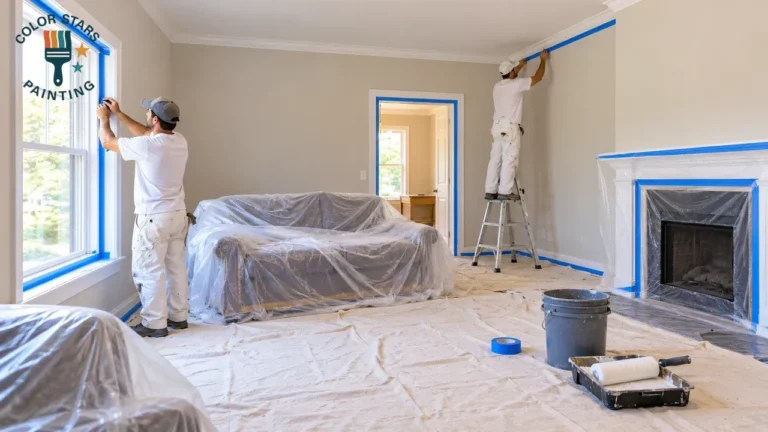
| Relocate Furniture | Move small items out of the room completely. Pull larger furniture toward the center of the space. | Creates a safe working buffer away from baseboards and walls. |
| Clean the Surfaces | Wipe down walls, baseboards, and corners with a damp cloth and mild soap. Remove dust, pet hair, and kitchen grease. | Prevents debris from getting trapped in the wet paint. Ensures a smooth, long lasting finish. |
| Point Out Repairs | Inspect drywall for dents, cracks, or nail pops. Point them out to your contractor during the initial walkthrough. | Allows the crew to patch and sand imperfections before applying the primary coat. |
| Secure Pets and Family | Plan a safe space, room, or day out for pets and young children. Keep them away from active work zones and chemical odors. | Keeps household members safe from wet paint, ladders, and open supply buckets. |
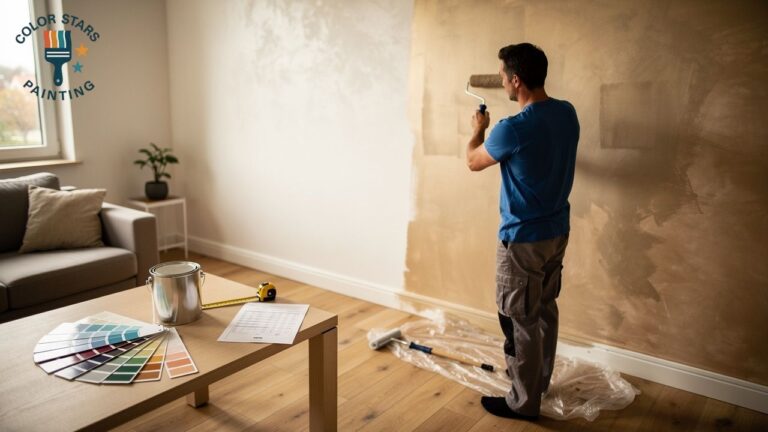
| Confirm Color Choices | Finalize all paint colors, brands, and sheen types, such as eggshell or satin, ahead of time with your contractor. | Eliminates project delays or mid job paint store runs. |
None of these take long on their own. Maybe ten minutes each. But add them up, and you’ve just saved the crew an hour they would’ve spent waiting on you instead of taping and priming.
Prepare Home for Interior Painting Without Overdoing It
Here’s a mistake we see constantly. People think preparing a home for interior painting means clearing out the entire house at once. It doesn’t. You only need to clear the room that’s getting painted that day.
Rooms three doors down that won’t see a paintbrush for a week? Leave them alone. Deal with each space as the crew gets to it. It keeps the rest of the house livable, which matters a lot if you’ve got kids or pets or just, you know, a life happening around the project.
Overdoing the prep actually backfires sometimes. We have walked into homes where furniture from three different rooms got piled into one hallway and now nobody can walk through without tripping over a lamp. A room by room approach beats clearing everything at once specially in the smaller Austin homes where storage space is already tight.
If space really is an issue, a garage or a short term storage unit can bridge the gap during a bigger project. Costs a little extra. Keeps the house functional while the work happens in stages though, which is usually worth it.
Prepare House for Interior Painting Around Air Quality Needs
There’s a part of preparing a house for interior painting that doesn’t get talked about enough, and that’s air quality. Fresh paint doesn’t just smell strong. It releases compounds that hang around longer than people assume.
According to the EPA, VOC levels indoors can run up to ten times higher than they do outside, based on its own indoor air quality research. That’s not a small gap. Cracking windows and running fans during the job, and for a couple days after, cuts that buildup down noticeably. Give it at least 48 hours of ventilation once the final coat goes on.
This matters even more if you’ve got little kids at home, older family members, or anyone with sensitive lungs. Scheduling the job for a stretch of days when windows can actually stay open, instead of the peak of an Austin summer when everything’s sealed shut for the AC, makes a real difference.
Low VOC and zero VOC paints have gotten a lot better too, and a lot more affordable. Worth asking your contractor about, especially for a nursery or a bedroom where someone’s going to be breathing that air all night.
| Pro Tip: Run a box fan facing outward in a painted room for two full days. This pulls fumes out faster than an open window alone. |
What to Do Before Interior Painters Arrive on Job Day
So what to do before interior painters arrive, in the simplest terms? Clear the walls. Move the furniture. Lock in your colors. Figure out where the dog’s going to hang out for the day.
Homeowners who knock this out the night before save real time the next morning. The crew walks in and starts taping immediately, instead of standing around while someone drags a couch across the room. A fast start just means a faster finish, every time.
Parking and access matter more than people think too. Crews haul ladders, drop cloths, and a lot of paint cans through the front door. Clear a path from the driveway, let them know where to park a work truck, and you’ve already saved everyone a headache before the first brush even comes out of the bag.
Temperature counts for something as well. Keeping the AC steady the day before helps paint cure evenly, which matters a lot during Austin’s hotter, more humid stretches when drying time tends to drag.
How to Prepare for Interior Painting in Older Austin Homes
If you’re in one of Austin’s older neighborhoods, especially closer to the central core, ask directly about lead safe certification before you sign anything. This isn’t a box checking exercise either. Handling old paint carelessly can send lead dust into the air, and that’s a real risk for anyone living in the house while the work’s happening.
Expect the prep phase to run a bit longer here. Certified crews use containment barriers and specific cleanup steps that a standard repaint job skips entirely. It adds time. It’s also exactly the kind of extra step that protects your family, so build it into your timeline from day one.
Choosing the Right Finish for Each Room
Not every room wants the same sheen and this trips people up more than you’d think. Kitchens and bathrooms do better with satin or semi gloss since both resist moisture and wipe clean without a fight. Bedrooms and living rooms usually look better in eggshell or matte which forgives minor wall imperfections instead of highlighting them.
Trim and doors almost always get their own semi gloss or gloss coat no matter what finish the walls end up with. That contrast holds up against daily hands and furniture bumps in a way flat paint never will. Nailing down sheen choices room by room rather than one blanket decision for the whole house and saves confusion on painting day and keeps connected spaces from looking mismatched.
Ready for Your Austin Interior Painting Project
A smooth paint job really does start with the steps above; nothing more complicated than that. Color Stars Painting LLC has spent over 22 years getting Austin homes ready and finished right.
Contact us at (512) 815 0310 or you can email us for a scheduled consultation at Servando033087@gmail.com and we will walk your project from that first coat to the final look together.
Frequently Asked Questions
Do interior painters clean walls before painting?
Yes. Professional painters wipe down walls to remove dust and grease and debris before any primer or paint goes on. This step helps the paint bond properly and reduces visible texture once dry.
How much should it cost to paint the interior of a 2000 sq ft house?
Costs vary based on paint quality and number of rooms or trim detail involved. Getting a walkthrough estimate from a local contractor gives the most accurate number for your specific home.
How do I prepare my house for the interior painting?
Clear wall decor or move furniture to the middle of the room and clean the surfaces beforehand. Confirm your colours and finish types with your contractor before the crew comes.
Do I have to move furniture for painters?
Most contractors ask homeowners to relocate minor objects out of the room. Larger pieces of furniture are generally relocated to the center of the room and covered rather than being moved out.
How much should I pay a painter per day?
Day rates depend on the scope of the job and the number of painters on site or local market rates in your area. A detailed quote gives a clearer number than a flat daily rate.
Can you paint a room without removing furniture?
Yes. But it limits access to walls and increases the risk of paint splatter on belongings. Moving furniture to the center and covering it fully gives better results than leaving it in place.
Final Thoughts
This guide teaches us that a little bit of preparation can go a long way. You should keep the rooms clean and lock the colours or communicate openly with your team.
That is truly all that is required to transform a difficult project into an easy one and the result is always reflected in the manner that the final coat appears to be clean.
Sources
- EPA, Renovation, Repair and Painting Rule — Explains lead safe certification requirements for pre 1978 homes. Quoted line: “includes all firms, even sole proprietorships.”
- EPA, What Are Volatile Organic Compounds (VOCs) — Covers indoor VOC levels from products like paint. Quoted line: “Concentrations of many VOCs are consistently higher indoors.”