Skip to content
Summarize with
Most Texas homes need a full exterior repaint every five to eight years, though intense sun exposure and coastal humidity can cut that to three or four. The answer to “how often should I repaint my home exterior in Texas?” depends on three factors: the type of siding you have, the direction your wall faces and whether you are near the Gulf or not.
It’s the same across every job we see: south and west walls fail first, every time. That home painting timeline has one additional step if your home was constructed before 1978.
If the paint was applied to a house more than 10 years ago, it can contain lead dust, which is a problem when you are scraping or sanding old paint. EPA’s guidance for DIY House Painters explains the steps to take to test for lead and prepare the house safely for others to sand.
What Determines How Often You Need to Repaint in Texas?
Sun exposure shortens paint life more than anything else here. South and west facing walls take direct UV hits most of the day, year round. NOAA’s state climate summary shows Texas temperatures up nearly 1.5°F since the early 1900s, with 2011 setting the record for 100°F days in a single season.
That heat cooks the binders in cheaper paint, and once the binder goes, so does the color and the protection. Siding material sets the other half of exterior house repainting frequency Texas homeowners deal with, while exterior painting services can help maintain the finish and protection.
Wood moves with every heat swing and stresses the paint film at the seams. Fiber cement and painted brick move less and last longer. Stucco falls in between, and elastomeric coatings buy it extra years by flexing instead of cracking.
How Long Does Exterior Paint Last in Texas?
How long does exterior paint last in Texas depends on exposure and material more than on which brand you bought. Here is a realistic range by wall type and sun exposure:
| Siding material | Full sun, south or west wall | Shaded, north wall | Coastal, high humidity |
|---|---|---|---|
| Wood siding | 4 to 6 years | 6 to 8 years | 3 to 5 years |
| Stucco | 6 to 8 years | 8 to 10 years | 5 to 7 years |
| Fiber cement | 8 to 10 years | 10 to 12 years | 6 to 9 years |
| Painted brick | 10 to 15 years | 12 to 18 years | 8 to 12 years |
These are general ranges based on standard 100 percent acrylic paint applied correctly over sound surfaces. Poor prep, thin coats, or oil-based paint on wood will cut every number in the table down.
Signs Your Home Exterior Needs Repainting Now
Signs your home exterior needs repainting show up before the paint fully fails, and catching them early keeps a repaint cheaper than a repair job. Watch for these:
- Chalking: a powdery material that gets rubbed in your hand when you touch a wall
- Fading that doesn’t match on shaded and sun-exposed areas of a wall
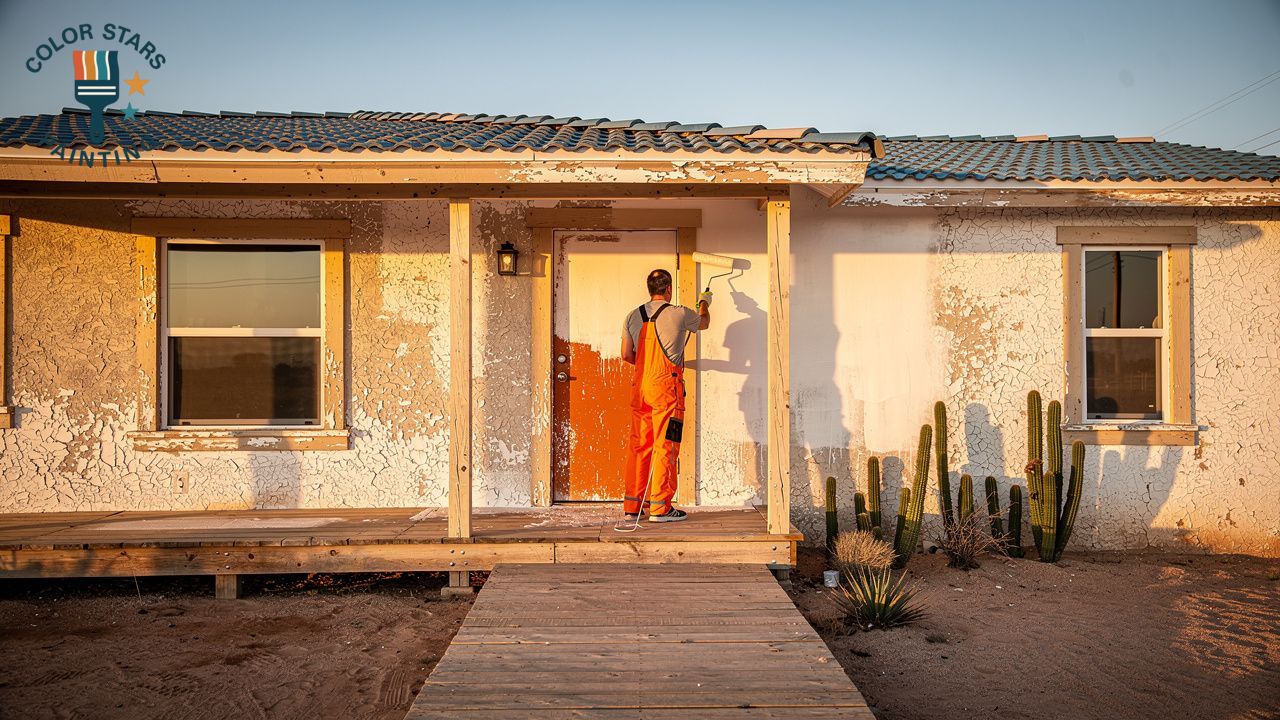
- Cracks or “alligator” (cracks around trims and windows)
- Moisture trapped beneath, such as peeling or bubbling
- Seal waterproof at corners and joints to prevent water from running around the siding
- Visible wood grain where the paint has worn thin
Chalking and fading are cosmetic and can wait a season. Peeling, bubbling, and gapped caulk are moisture problems, and moisture problems get worse, not better, the longer they sit.
How Texas Climate Affects Exterior Paint
Texas is plagued by three stressors: excessive UV, extreme temperature fluctuations and humidity on the eastern side of the state. Trapped moisture in building cavities is a common reason for early paint failure, according to the EPA. Moisture and afternoon storms in the East Texas and along the Gulf Coast make walls moist for longer than most paint is intended to endure.
Hail is the other factor, mostly in North Texas and the Panhandle. It can crack or chip paint on impact even when the siding underneath is fine.
Note for older homes: if built before 1978, any work disturbing the paint falls under EPA’s lead safe rules, and a paid contractor must be lead safe certified. That’s federal law. Ask for certification before anyone touches a pre 1978 exterior.
Exterior Paint Maintenance You Can Do Yourself in Texas
Exterior paint maintenance Texas homeowners can handle without a ladder crew includes:
- To remove pollen, dust and mildew spores that can mar the finish, flush them off with a garden hose and soft brush twice a year on that spot.
- Inspect and re-caulk small openings around windows, doors and trim annually before summer temperatures increase and open windows and doors wider.
- Repaint any bare areas in small spots of wood or fiber cement with matching paint as soon as they are seen as bare areas will absorb water quickly.
- Use pruning to remove shrubs and tree limbs that help keep a wall moist and shady and provide conditions for mildew to grow.
There’s nothing like that that needs a pro to do. What does this mean: full color-coat repainting, any repaint that occurred on a home before 1978, structural repair behind failed paint, structural repair for stucco or masonry cracks before painting.
When to Call a Professional Exterior Painting Contractor in Texas
A good exterior painting contractor can tell you when a spot repair beats a full repaint, not just quote the bigger job.
Call one when peeling or bubbling is present in more than one location, bare wood has been exposed for more than two weeks, a stucco crack is wider than a hairline, or your home was constructed prior to 1978 and requires paint removal.
The right pressure washing equipment is used by a professional crew, which includes moisture meters to ensure siding is completely dry for painting and sprayers that apply a more uniform coat than by rolling.
Frequently Asked Questions
How often should you repaint a house in Texas?
Every five to eight years for most homes. Sun exposed walls, wood siding, and coastal humidity can shorten that to three to five.
Does colour of paint matter to repainting frequency in TX?
Yes. Lighter colors on that wall will absorb less heat and will not fade as quickly – by a year or two at least.
What’s the best time of year to paint a house exterior in Texas?
In the spring and fall when the temperature is in the 50-85 range and humidity is reduced. You should not use extreme heat to dry paint since it is damaging to the adhesion.
How many times is the job of repainting a house repeated near the Texas Gulf Coast?
Once every 3-5 years on wood siding. Paint in coastal areas ages faster in the presence of salt air than in inland areas in the presence of heat.
Does hail change how often North Texas homes need repainting?
Yes. Hail can crack or chip paint even on undamaged siding. Inspect after any major hailstorm regardless of your last repaint date.
How does Central Texas heat affect repaint frequency in cities like Austin or San Antonio?
Extended 100°F stretches speed up chalking and fading on south and west walls. Those sides often need touch ups a year or two before the rest of the house.
Plan Your Exterior Repaint With Confidence
If you are seeing any of the warning signs above, Color Stars Painting LLC will give you a straight answer on repaint versus repair. Call (512) 815-0310, or reach out at Servando033087@gmail.com, for an honest look at your exterior before you spend money on the wrong fix.
Sources
- NOAA National Centers for Environmental Information, Texas State Climate Summary: supports the temperature rise and 2011 heat record cited in the climate section
- U.S. EPA, Addressing Indoor Environmental Concerns During Remodeling: supports the moisture and premature paint failure claim
- U.S. EPA, Lead-Safe Renovations for DIYers: supports the pre-1978 lead-safe certification requirement
- U.S. EPA, Renovation, Repair and Painting Program: Contractors: supports the certified-firm requirement for paid work on pre-1978 homes