Skip to content
Summarize with
Early summer and early fall are the most effective times to paint a house exterior. These periods typically offer the stable temperatures and low humidity levels required for paint to bond correctly to siding. Ideal weather consists of dry days with temperatures staying between 50 and 85 degrees Fahrenheit for at least 48 hours. Avoiding extreme heat and sudden rain is the most important factor in ensuring a professional finish that lasts for years.
Timing a painting project depends on finding a window where the thermometer stays within a specific range and the sky remains clear. Success relies on the paint drying and curing at a steady pace. When temperatures drop too low at night or climb too high during the day, the chemical bond of the paint fails, leading to peeling or cracking shortly after application. This guide explains how to identify the best time to paint house exterior surfaces based on weather patterns and material requirements.
Ideal Temperature for Exterior Painting
Temperature plays a major role in how paint adheres to a surface. Most paint manufacturers design their products to perform best when the air and the surface are neither too hot nor too cold. For many years, the standard recommendation was to wait for days above 50 degrees Fahrenheit. Modern technology now allows some high-quality paints to be applied in temperatures as low as 35 degrees. However, the safest range for most projects remains between 50 and 85 degrees.
If the air is too hot, the paint dries too quickly. This prevents the liquid from leveling out, which results in visible brush marks and a bumpy texture. In extreme heat, the paint may even bubble or blister. Conversely, if it is too cold, the paint struggles to dry at all. Cold temperatures prevent the latex particles from fusing, leaving the finish prone to washing away during the next rainstorm. According to technical data from Sherwin-Williams, maintaining a consistent temperature during the first 24 hours after application is necessary for a long-lasting finish.
| Paint Type | Minimum Application Temp | Maximum Application Temp | Preferred Humidity Level |
|---|---|---|---|
| Standard Acrylic Latex | 50°F (10°C) | 85-90°F (32°C) | 40% to 70% |
| Low-Temp Acrylic | 35°F (2°C) | 80°F (27°C) | 40% to 60% |
| Oil-Based Paint | 40°F (4°C) | 90°F (32°C) | Below 60% |
Bonus Tip: Watch the Surface Temperature
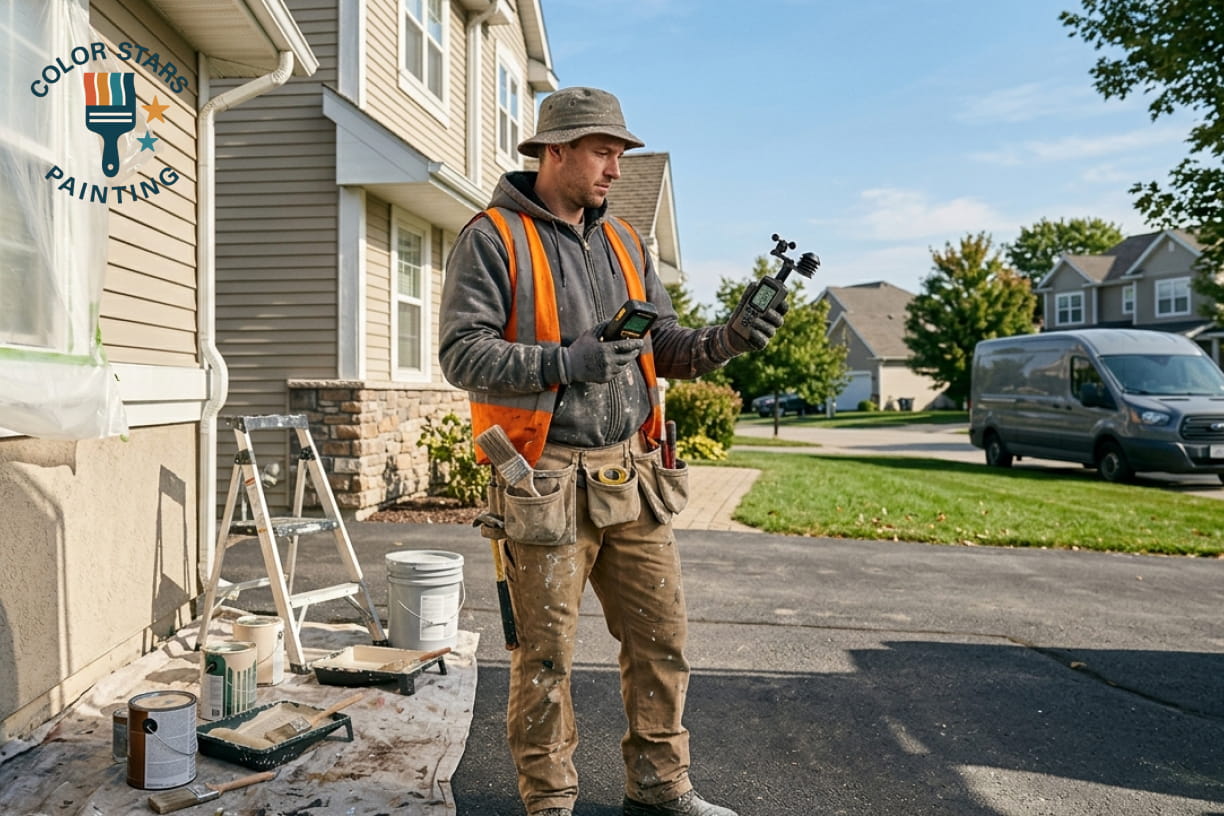
The temperature of the wood or siding is often different from the air temperature. Darker colors absorb more heat, and surfaces in direct sunlight can be 10 to 20 degrees hotter than the surrounding air. Always feel the surface before starting. If it feels hot to the touch, wait for the shade to cover that side of the house.
Weather Conditions for Exterior Painting
Humidity and precipitation are just as influential as temperature when determining when to paint exterior house walls. High humidity slows down the evaporation process. For water-based paints, the water in the paint must evaporate so the resin can form a hard film. If the air is already saturated with moisture, that evaporation cannot happen efficiently. This leads to a gummy finish that attracts dirt and debris.
Rain is the most obvious enemy of a painting project. Professional house painting company standards suggest checking the forecast for a minimum of two dry days after the job is finished. If rain hits fresh paint within the first few hours, it can cause streaks or even wash the paint right off the siding. Wind is another factor to monitor; strong gusts carry dust, pollen, and insects that stick to wet paint, ruining the smooth texture.
Best Season for Exterior House Painting
Early fall is widely considered the best season for exterior house painting in many regions. During September and October, the extreme heat of summer has passed, and the frequent rain showers of spring have not yet returned. The daytime temperatures are usually mild, and the humidity levels tend to drop. This combination allows for a predictable drying schedule.
Early summer is the second-best option. While the days are longer and provide more working hours, the risk of summer thunderstorms and high humidity can be a challenge. Spring often presents difficulties because of unpredictable rain and high pollen counts. If paint is applied while trees are releasing heavy amounts of pollen, the yellow dust will become a permanent part of the home’s finish.
Regional Differences in Timing
In the southern states, winter is often a viable time for painting because the temperatures rarely drop below freezing. In these areas, mid-summer is actually the worst time due to extreme humidity and intense sun. In northern climates, the window of opportunity is much smaller, usually limited to late May through early October. Following local weather patterns is more effective than following a calendar.
Things to Consider Before Making a Decision
Preparation is the most time-consuming part of any painting job. Before picking a date, evaluate the condition of the home. If the wood is damp from a recent storm, it needs several days of dry weather to release that moisture. Painting over damp wood traps water inside, which eventually causes the paint to bubble and the wood to rot.
A report from Consumer Reports suggests that the quality of the paint itself impacts how much the weather matters. Higher-quality paints have better elasticity, allowing them to handle temperature swings more effectively than budget options. Consider these factors before starting:
- Does the forecast show at least three days of clear skies?
- Are the nights staying above the minimum required temperature for the specific paint brand?
- Has the siding had enough time to dry after a pressure wash or rain?
- Is the wind speed low enough to prevent debris from blowing onto wet surfaces?
Bonus Tip: Follow the Sun
Experienced exterior painters use a strategy called “following the sun.” This involves starting on the side of the house that is currently in the shade and moving around the building as the sun shifts. This ensures that the paint is never applied to a surface that is baking in direct sunlight, which prevents premature drying.
Common Questions About Timing
Homeowners often wonder if they can push the limits of the painting season. While it is possible to paint in less-than-perfect conditions, the risk of failure increases. If the temperature drops below the minimum threshold overnight, the paint may look fine the next morning but will fail to protect the home over the long term.
Another frequent question involves the optimal time of day to work. It is best to wait until the morning dew has completely evaporated before starting. Beginning too early in the morning when the siding is still damp from overnight condensation will prevent the paint from sticking. Similarly, stop painting a few hours before dusk. This gives the paint enough time to set before the temperature drops and moisture begins to settle on the surface again.
Benefits of Professional Guidance
Home painting professionals understand the local microclimates and how they affect different materials. Hiring a professional house painting company ensures that the project is handled with the right equipment and knowledge of local weather trends. Professionals often have access to moisture meters to test the siding before a single drop of paint is applied.
According to market data provided by Zillow, a fresh coat of exterior paint can significantly increase a home’s curb appeal and potential resale value. Investing in a professional job at the right time of year protects the structure from water damage and UV rays. Color Stars Painting uses this knowledge to help homeowners select the right products for their specific environment.
Answers to Frequent Questions
What happens if it rains right after painting?
If it rains within four to six hours of application, the water can cause spotting or wash the paint away. If the paint has had at least 24 hours to dry, a light rain usually will not cause damage. If the paint is damaged by rain, the surface must be allowed to dry completely, sanded, and repainted.
Can I paint my house in the winter?
In colder climates, winter painting is not recommended because standard paints cannot cure below freezing. However, in warmer regions where temperatures stay above 35 to 40 degrees, specialized cold-weather paints can be used successfully. Always check the specific product label for temperature requirements.
How long does exterior paint take to dry between coats?
Most acrylic latex paints are dry to the touch in one to two hours. However, it is best to wait at least four to six hours before applying a second coat. In humid or cool conditions, this wait time should be extended to a full 24 hours to ensure the first coat is stable.
Is it better to paint in the morning or afternoon?
Late morning is usually the best time to start. This allows the morning sun to dry any dew. Painting should stop by mid-afternoon so the paint has several hours to dry before the evening temperature drop and the return of humidity.
Summary of Timing for Best Results
Selecting the right window for an exterior painting project ensures a durable and attractive finish. Prioritize days with temperatures between 50 and 85 degrees and humidity below 70 percent. Early fall remains the top choice for most homeowners due to consistent conditions. Always check the local forecast for a 48-hour dry period and ensure the siding is completely dry before beginning. Evaluating the specific needs of the home and the local climate will lead to the best long-term results.
Expert Assistance with Your Project
Color Stars Painting provides expert guidance for homeowners looking to refresh their property. With years of experience in the industry, the team ensures every project is timed perfectly for the local weather. For a consultation or to discuss a project, contact Color Stars Painting at (512) 815-0310 or via email at Servando033087@gmail.com. Choosing experienced exterior painters helps avoid the common pitfalls of weather-related damage and ensures a high-quality finish for any home.
Sources
- Sherwin-Williams – A leading paint manufacturer providing technical specifications on temperature and humidity for exterior coatings.
- Consumer Reports – An independent organization that tests paint durability and provides guidelines on the best conditions for home maintenance.
- Zillow – A real estate marketplace that provides data on how home improvements like exterior painting affect property value and marketability.