Skip to content
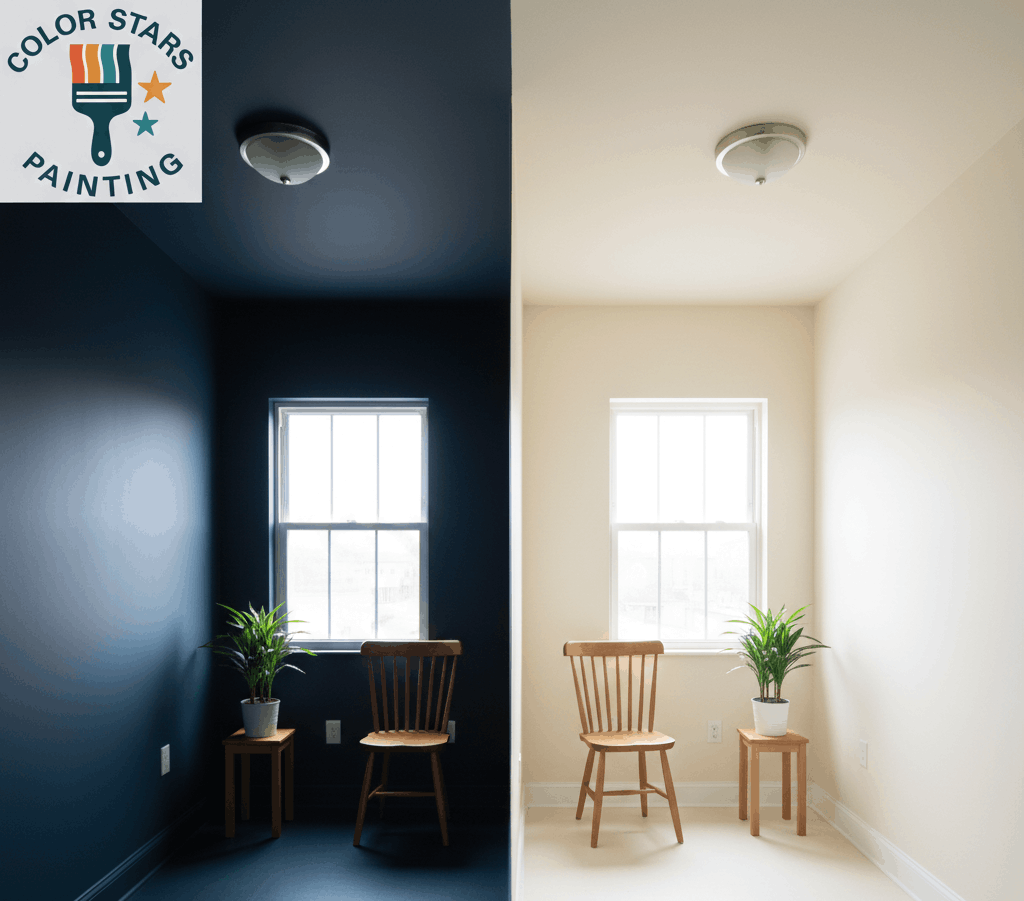
To make a room look larger with paint, focus on using light colors with a high Light Reflectance Value (LRV) and creating a seamless visual flow. Selecting shades like off-white, light blue, or soft gray helps walls recede and bounce light across the space. Painting the trim, baseboards, and ceiling the same color as the walls removes visual breaks that typically make a room feel segmented and small.
This guide explains how specific colors, finishes, and techniques change the perception of a physical space. By understanding the interaction between light and pigment, anyone can turn a cramped area into an open environment. Color Stars Painting provides these professional standards to ensure every painting project achieves its maximum potential for spatial expansion.
The Importance of Light Reflectance Value
The most effective way to expand a room involves understanding how much light a wall reflects back into the space. A guide from PPG Paints explains that Light Reflectance Value (LRV) is a scale from 0 to 100 that measures the percentage of light a color reflects. Black has an LRV of 0, while pure white has an LRV near 100. For small rooms, choosing a color with an LRV of 50 or higher is a reliable rule.
Colors with high LRV ratings do not just look “brighter.” They physically distribute natural and artificial light more efficiently. When light hits a dark wall, the surface absorbs the energy, making the wall feel closer and the room feel heavier. In contrast, high LRV paints act like a soft mirror. This reflection fills the corners and shadows, which tricks the eye into seeing more depth than actually exists.
Selecting the Right Color Temperature
Color temperature dictates whether a room feels cozy or expansive. Cool colors, such as light blues, greens, and violets, are known as receding colors. They appear further away from the eye than they actually are. According to a color study by Benjamin Moore, cool tones help walls feel like they are moving outward. This creates an airy, open atmosphere that works well in small bathrooms or narrow hallways.
Warm colors like reds, yellows, and oranges are advancing colors. They draw the eye forward and can make a large room feel more intimate. In a small space, these tones often feel overwhelming. If a warm palette is necessary, stick to very pale versions like “butter” or “champagne” to avoid the walls closing in.
Understanding Paint Color Ranges and LRV
| Color Category | Typical LRV Range | Spatial Impact |
|---|---|---|
| Pure White | 85 to 94 | Maximum brightness and expansion |
| Off-Whites and Creams | 73 to 84 | Open feel with added warmth |
| Light Pastels | 60 to 72 | Airy and recedes from the eye |
| Mid-Tones | 40 to 59 | Balanced, neutral perception |
| Deep/Dark Tones | Below 35 | Enclosed, cozy, and intimate |
Using Monochromatic Schemes to Remove Boundaries
Visual clutter is the enemy of a small room. When walls, trim, and ceilings are painted in contrasting colors, the eye stops at every junction. These “breaks” define the limits of the room, emphasizing its small size. Using a monochromatic approach involves painting all surfaces in the same color or very similar shades.
When the baseboards and crown molding match the wall color, the eye moves up and down without interruption. This makes the walls appear taller and the floor space seem wider. While a uniform color is effective, data provided by Behr suggests that painting the ceiling a shade or two lighter than the walls is a complementary technique that creates the illusion of even higher ceilings. This approach is especially useful in basement rooms or apartments with standard eight-foot ceilings.
Bonus Tip: Use a slightly higher sheen on the trim than on the walls. Even if the color is the same, a satin or semi-gloss finish on the trim reflects more light, adding a subtle layer of depth without breaking the visual flow.
The Role of Paint Sheen in Spatial Perception
After selecting a color scheme, choosing the right finish is the next critical step in altering spatial perception. Flat or matte paints absorb light, which can make a small room look dull. While flat paint is excellent for hiding imperfections on old walls, it does nothing to help a room feel larger.
Eggshell and satin finishes are the standards for most living areas because they offer a soft glow. According to Sherwin-Williams, reflective finishes like semi-gloss or high-gloss are excellent for bouncing light, but they should be used sparingly. A high-gloss ceiling, for example, can act like a mirror and significantly increase the perceived height of a room. However, glossier paints reveal every bump and crack in the drywall, so professional surface preparation is required.
Things to Consider Before Selecting Paint
Before purchasing several gallons of paint, evaluate the specific environment of the room. Not every “space-saving” color works in every house.
- Direction of Natural Light: North-facing rooms receive cool, bluish light. Painting service these rooms in a cool gray might make them feel cold and clinical. South-facing rooms get strong, warm light, which can make some off-whites look yellow.
- Existing Flooring: The floor is the largest “unpainted” surface in the room. If the flooring is dark wood or carpet, the wall paint needs to provide enough contrast to keep the room from feeling like a cave.
- Artificial Lighting: Check how the paint looks under LED or incandescent bulbs. Some “bright” colors can look muddy or green under certain light temperatures.
- Furniture Scale: Even the best paint job cannot fix a room stuffed with oversized furniture. Ensure the paint color complements the size and volume of the pieces in the room.
Advanced Painting Techniques for Extra Width
If a simple coat of light paint is not enough, specific patterns can alter the room’s geometry. Vertical stripes, created with two similar shades of the same color, draw the eye upward to make a ceiling feel higher. Horizontal stripes can make a short wall feel much wider.
Another method involves the “accent wall.” While some believe accent walls make rooms look smaller, a dark accent wall at the far end of a long, narrow room can actually add depth. The dark color makes that specific wall feel like it is receding if the side walls are kept very light.
Bonus Tip: To make a hallway look wider, paint the end wall a slightly darker shade than the side walls. This draws the eye to the end of the hall, emphasizing the length and making the narrowness of the side walls less noticeable.
Common Questions about Painting Small Spaces
Does white paint always make a room look bigger? Not necessarily. In a room with very little natural light, pure white can look gray and dingy. In those cases, a light neutral with a bit of warmth often works better to create a sense of space.
Should baseboards be white or the same color as the walls? For the largest look, paint them the same color as the walls. This eliminates the “frame” around the floor, which makes the floor area appear to extend further.
Can dark colors ever make a room look larger? Yes, deep colors like navy or charcoal can create an illusion of depth in a room with very little light. Because the corners “disappear” into the shadows, the boundaries of the room become harder to define.
Ways to Ensure Success
Choosing the right paint involves more than just picking a swatch. Always test a large sample on at least two different walls. Observe how the color changes from morning to night. Lighting is the most significant factor in how paint performs. If the room is naturally dark, lean toward colors with the highest LRV possible. If the room has plenty of windows, you have more flexibility to use mid-tones or soft pastels.
Color Stars Painting suggests looking at the room as a complete box. Every surface, including the doors and window frames, impacts how the eye measures the space. By minimizing contrast and maximizing light reflection, any room can feel more open and comfortable.
Helpful Answers to Frequent Queries
Is it better to use a matte or glossy finish in a small room?
An eggshell or satin finish is usually best. These finishes provide enough reflection to brighten the room without the harsh glare or “plastic” look of high-gloss paint. Matte finishes should be avoided in small, dark spaces as they absorb the limited light available.
What is the best color for a small bathroom with no windows?
Light, cool tones like seafoam green, pale blue, or a crisp off-white are excellent choices. Since there is no natural light, these colors work well with bright LED vanity lights to keep the space from feeling claustrophobic.
Does painting the ceiling the same color as the wall make it feel lower?
If the color is light, it actually makes the ceiling feel higher because the “line” where the wall ends is gone. If the color is dark, it will make the ceiling feel lower and the room more “wrapped” and cozy.
Should I use large or small paint rollers for a small room?
Using a standard 9-inch roller is best for the main walls to ensure a smooth, even finish. Small rollers or brushes should be reserved for the corners and trim. An even finish is vital because lap marks or uneven texture can create shadows that make a room feel smaller.
Strategic Direction for Your Project
When planning to change the feel of a room, start by measuring the light. Focus on colors that rank high on the LRV scale and aim for a monochromatic look to keep the eye moving. Evaluate your furniture and natural light sources before making a final selection. Every home has unique lighting conditions, so testing samples is the only way to guarantee the result you want.
Professional Assistance for Your Home
For those looking to transform their living spaces, Color Stars Painting offers expert guidance and application. Achieving a seamless, professional finish is essential when trying to make a small room feel expansive. For more information or to discuss your specific needs, you can reach the team at (512) 815-0310 or via email at Servando033087@gmail.com. Color Stars Painting focuses on high-quality results that improve the look and feel of every home.